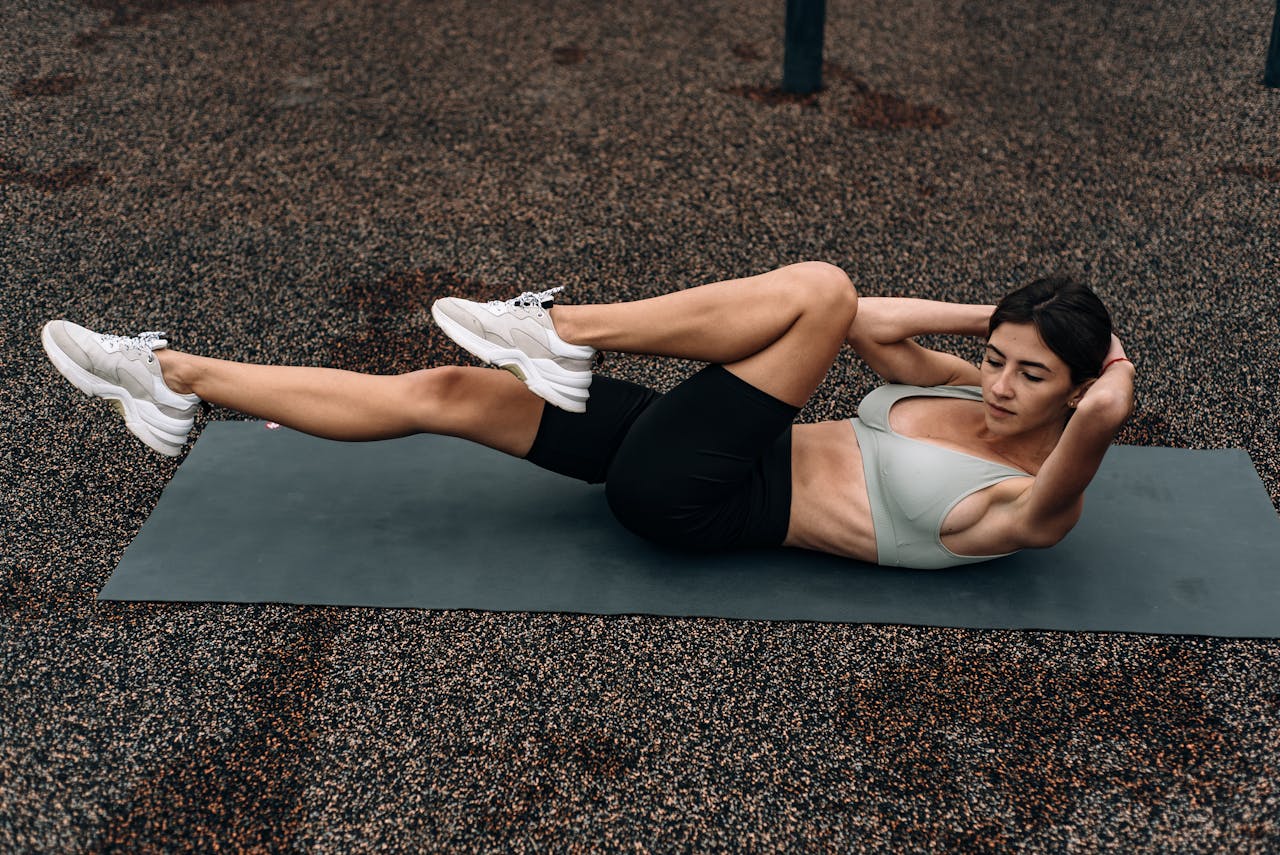
When you think of training your core, what do you think of? Is it lots of crunches and sit-ups? Or maybe it’s ab-burning Youtube videos.
Your core is more than just getting a 6-pack! It involves the various abdominal muscles, the lumbar region, erector spinae, hip flexor, posterior leg, and pelvic floor muscles.
In this article, we will discuss 6 components of training the core: Flexion, Extension, Lateral flexion/extension, Rotation, Anti-rotation, and Stability.
Flexion
This motion is what most think of when someone says “core training”. It will be contracting the abdominal muscles to bring the sternum and ribcage closer to the hips. Exercises to accomplish this are crunches, sit-ups, and all their variations.
Extension
Extension will be the opposite of flexion, which means, extending the abdominals (stretching). Contracting the lower back and glutes will accomplish this motion. Think superman, and swimmers.
Lateral Flexion and Extension
To complete this movement, you will essentially be doing a side bend. Examples of this are penguin crunches and standing side crunch.
Rotation
Rotation will be more of a twisting motion. You are contracting from one side of the body to the other. Exercises for this motion can include: russian twist, and chops.
Anti-rotation
This, you can likely guess, is the opposite of rotation. You are trying to resist rotating. This is incredibly helpful for core control. Some examples are: dead bug, bird-dog, and bear crawls.
Stability
To work on core stability can include a couple of things, for simplicity right now, it is keeping your core from moving whatsoever. A few examples of this are plank, pallof press, marches, and hollow body hold.
It is important to include all these in a workout program because as humans, we move in different planes and all sorts of motions. It only makes sense to train in this way to imitate and prepare for daily living and tasks we may have.
A simple guideline to follow to include these is to add one or two categories to most workouts you do during the week. As you train this way, you may have better posture and stability, aches and pains may diminish, and you may find that other exercises in your training are smoother or are able to be progressed more because you have worked on your foundation.


