Unleash Your Inner Hunter-Gatherer: Reclaiming Your Body’s Primal Power for Explosive Performance and Resilient Joints
The Modern Dilemma: Why We’ve Lost Our Spring
Our bodies are remarkable masterpieces of engineering. They have been meticulously sculpted over 300,000 years of human evolution to thrive in dynamic, challenging environments.
For millennia, our ancestors engaged in a rich tapestry of fundamental movement patterns. These were not structured “workouts.” They were integral components of daily survival and community life. This included deep squatting for rest or foraging. It also included crawling across varied terrains, pushing and pulling objects, hinging at the hips, and carrying heavy loads. A diverse range of gait patterns was also essential. These encompassed walking, running, and jumping.
These constant, varied physical demands shaped a musculoskeletal system that is inherently resilient and efficient.
From Evolutionary Design to Modern Disconnection
However, the prevailing modern lifestyle presents a stark contrast to this ancestral blueprint. It is characterized by prolonged periods of sitting. It also includes increased screen time and often a significant lack of varied physical demands.
Contemporary life has created a profound disconnect from the very movements that forged our physiology. This departure from our evolutionary movement heritage contributes to a wide array of health challenges. These include pervasive joint and skeletal problems, metabolic diseases, and obesity.
The fundamental shift in the quality and variety of physical stimuli our bodies receive has led to what can be understood as an “evolutionary mismatch.” Our musculoskeletal system includes an intricate network of joints, tendons, and ligaments. It evolved under conditions of constant, diverse mechanical loading.
When this essential loading is absent or substantially reduced, the system operates suboptimally. This is not merely a matter of “lack of exercise.” It is a fundamental change in the very language our body’s tissues understand.
Why Modern Joint Problems Are Not Just Aging
This mismatch is a core contributor to widespread musculoskeletal issues. The body is designed for adaptation. It responds to disuse by weakening rather than maintaining its inherent strength and resilience.
Many contemporary joint problems are therefore not inevitable consequences of aging. They are a direct result of our departure from this deeply ingrained evolutionary movement blueprint.
The “Muscle-Only” Myth: Why Many Struggle to Run and Jump Efficiently
A common approach to movement centers on a “muscle-only” mindset. This is especially true in activities like running and jumping. Individuals and athletes frequently focus solely on muscular strength and power. They believe that more muscle equals better performance.
Yet, this singular focus often leads to recurring pain. It can also cause decreased performance and persistent injuries. The reality is far more sophisticated.
The Role of the Spring-Mass System
Efficient running and hopping are not simply about isolated muscle contraction. They involve a highly integrated “spring-mass system.”
In this system, the entire lower extremity functions much like a single linear spring. This complex system comprises muscles, tendons, ligaments, and connective tissues. All of them work together to store and return energy.
Tendons are remarkably efficient elastic structures. They can return an impressive 90–97% of the energy they absorb. This elastic storage is crucial for conserving metabolic energy. It becomes especially important at higher speeds. At these speeds, kinetic and potential energy is temporarily stored as elastic strain energy. It is then rapidly released.
Studies have shown something remarkable. For running humans and hopping kangaroos, this elastic mechanism can save more than half the metabolic energy required for locomotion.
The Cost of Ignoring Elastic Energy
An over-reliance on muscular contraction bypasses the body’s efficient design. This happens when elastic recoil mechanisms are ignored.This leads to several disadvantages.
Firstly, it results in inefficiency. More metabolic energy is used for the same output. This leads to quicker fatigue.
Secondly, muscular force alone cannot generate the same rapid power output. This is compared to muscles amplified by elastic energy release.
Thirdly, without tendon buffering, muscles and joints bear higher peak forces. They also experience greater lengthening rates. This may increase injury risk.
True athletic performance is a symphony of muscle and elastic tissue. Neglecting one leads to suboptimal outcomes.
The Biomechanical Blueprint: Unlocking Your Body’s Natural Springs
To truly move with the efficiency and power of our ancestors, it is essential to understand and optimize the intricate biomechanical components that act as our body’s natural springs.
The Foot’s Foundation: Forefoot Mobility & Control
Our feet serve as the initial point of contact with the ground. Their intricate biomechanics are absolutely fundamental to all athletic movement.
Foot biomechanics encompasses the precise alignment of 26 bones, 33 joints, and over 100 muscles, tendons, and ligaments within each foot. This complex system dictates how we move, maintain balance, and efficiently bear weight.
Why the Forefoot Is Critical for Performance
The forefoot, which includes the metatarsals and toes, plays a particularly crucial role. It provides the necessary flexibility for powerful propulsion, stable balance, and agile changes in direction.
Optimal forefoot mobility and control are indispensable for establishing a stable foundation during explosive movements and ensuring efficient force transmission throughout the entire kinetic chain.
Furthermore, excellent proprioception (the body’s innate ability to sense its position, movement, and action) within the forefoot is vital for injury prevention, especially during activities that place substantial stress on this area.
How Foot Dysfunction Affects the Entire Body
The foot is far more than a static platform or a simple shock absorber. It is a highly dynamic, intelligent structure that actively contributes to movement quality and injury prevention. If the forefoot lacks adequate mobility or control, the body will inevitably compensate. This leads to inefficient movement patterns and increased stress on other joints, such as the ankles, knees, hips, and even the lower back, which are not designed to handle these compensatory loads.
This highlights that foundational issues in the foot can have widespread, cascading negative effects throughout the body.
The Powerhouse Connection: Ankle, Plantar Stiffness & the Windlass Mechanism
Beyond the forefoot, the ankle joint stands as a critical nexus for power generation, particularly in jumping activities. The powerful calf muscles (the gastrocnemius and soleus), which converge to form the robust Achilles tendon, are prime movers of the ankle. They enable plantarflexion (pointing the foot downward) and are essential for propelling the body forward.
Understanding the Windlass Mechanism
Crucially, the foot also possesses an ingenious biomechanical marvel known as the Windlass Mechanism.
One can visualize this mechanism as a rope tightening around a pivot point. In the foot, the plantar fascia, a thick band of connective tissue spanning the sole, acts as this “cable,” connecting the heel bone (calcaneus) to the base of the toes (metatarsal heads).
During the propulsion phase of walking or running, as the toes extend upwards (dorsiflex) off the ground, the plantar fascia effectively wraps around the metatarsal heads, which serve as the pivot point. This action shortens the distance between the heel and toes, pulling them closer together, and simultaneously raises the arch of the foot.
This transformation compacts the small bones of the foot, converting it into a rigid, stable lever (a “supinated” position). This rigid lever is indispensable for an efficient push-off, allowing stored elastic energy within the fascia and the foot’s arch to be powerfully released, springing the body forward.
What Happens When This Mechanism Fails
Dysfunction in this mechanism, often stemming from a lack of mobility in the big toe joint or issues with the plantar fascia itself, means the foot cannot properly form this rigid lever during push-off. This leads to unsupported propulsion, significant energy loss, and increased compensatory loads on other tissues throughout the kinetic chain.
The Windlass Mechanism is a prime example of how the body utilizes passive, elastic structures like the plantar fascia and foot arches to generate active power, thereby minimizing muscular effort. It is not merely about pushing off the ground; it is about the precise timing and efficiency of stiffening the foot to maximize elastic energy return.
A compromised windlass mechanism means the body loses this critical leverage, forcing muscles to work harder, increasing overall energy expenditure, and potentially leading to overuse injuries due to inefficient force transfer.
This mechanism powerfully illustrates the body’s incredible capacity to “recycle” energy through intelligent biomechanical design. Optimizing the windlass mechanism, including ensuring adequate big toe mobility, is an often-overlooked yet critical aspect of improving running and jumping performance and preventing common foot and ankle issues.
The Elastic Engine: Calves & Achilles Tendons
The calves, specifically the gastrocnemius and soleus muscles, together with the Achilles tendon, form arguably the most powerful elastic spring in the human body. These muscles are essential for enabling fundamental movements such as walking, running, jumping, standing on the toes, and maintaining upright posture.
The Achilles tendon (AT) stands as the strongest and thickest tendon in the human body, capable of withstanding immense forces, up to 4 times body weight during walking and an astonishing 12.5 times body weight during running and jumping. Its remarkable ability to store significant elastic strain energy during the initial stance phase of movement and then rapidly release this energy during propulsion is a cornerstone of human locomotion efficiency. This process is a textbook example of the
Stretch-Shortening Cycle (SSC). Muscles and tendons rapidly stretch (the eccentric phase), absorbing energy, and then immediately contract (the concentric phase), releasing that stored energy in a powerful, spring-like explosion. The gastrocnemius and soleus muscles, through their series elastic elements (SEEs), essentially act in a “catapult-like fashion” to maximize ankle joint power during activities like jumping.
Why Tendon Quality Matters
While muscles generate force, the Achilles tendon acts as a critical amplifier and energy buffer. Its incredible load-bearing capacity and energy return efficiency are paramount. The vivid description of its “catapult-like fashion” powerfully illustrates its role in generating explosive power.
The deeper understanding here is that the quality of the tendon (its optimal stiffness and compliance)is paramount. A tendon that is overly stiff may not store sufficient energy, while one that is too compliant might not return it efficiently. The example of the Maasai (discussed further below) reinforces that longer, more compliant Achilles tendons offer a distinct biomechanical advantage, suggesting that the characteristics of the tendon are as vital as the mass of the muscle it connects.
Many individuals train their calves primarily for size; however, the true athletic benefit stems from training them to optimize tendon elasticity and SSC efficiency. Therefore, training programs must prioritize exercises that specifically load and unload the Achilles tendon to enhance its elastic properties and improve SSC efficiency, moving beyond simple concentric calf work.
The Maasai Masterclass: Learning from Ancestral Jumpers
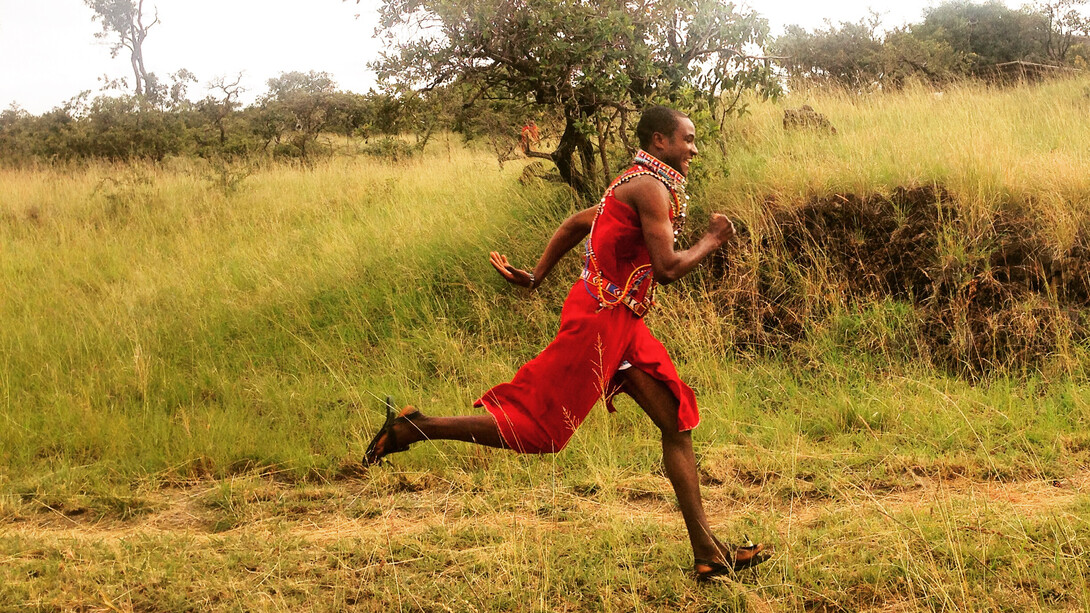
The legendary vertical jumps of the Maasai warriors are not merely a feat of raw strength but a profound demonstration of biomechanical efficiency, cultural practice, and lifelong plyometric training. Their “Adumu” jumping dance is a revered rite of passage, emphasizing strength, endurance, and unity, rather than simply maximal jump height.
The science behind their incredible leaps reveals a technique characterized by minimal knee flexion, relying instead on rapid, explosive elastic power primarily generated from the calves and Achilles tendon.
This technique is a textbook application of the Stretch-Shortening Cycle (SSC). Studies indicate that Maasai often possess longer legs relative to their height and more compliant (stretchy) Achilles tendons, which significantly aid in storing and releasing elastic energy with each jump. Their lifelong practice, beginning in childhood, of jumping over obstacles cultivates balance, coordination, and leg strength through rhythmic repetition. Their unique style prioritizes explosive force and an energy-saving motion over sheer height.
A Lesson in Ancestral Movement Efficiency
The Maasai provide a compelling, real-world example that perfectly encapsulates the ancestral movement philosophy and directly challenges the “muscle-only” approach. Their jumping prowess is not rooted in deep squats or maximal strength lifts, but in mastering the skill of elastic energy utilization.
This highlights that optimal movement is a highly refined skill developed through consistent, specific, and rhythmic loading over a lifetime. It stands as a testament to the body’s remarkable adaptive capacity when provided with the right kind of stress from an early age, contrasting sharply with the increasingly sedentary upbringing prevalent in modern society. This powerful case study inspires a shift in focus from isolated muscle building to cultivating integrated, elastic movement patterns, underscoring that true mastery in locomotion comes from practice and efficiency, not just raw power.
Key Biomechanical Components for Explosive Performance
The “Stress-for-Strength” Theory: Building Fortified Joints
The Body’s Adaptive Wisdom: Mechanobiology & Wolff’s Law
Our bodies possess an extraordinary capacity for adaptation, constantly remodelling in response to the demands placed upon them. This adaptive wisdom is governed by fundamental principles such as Mechanobiology, the study of how mechanical forces influence biological processes, and Wolff’s Law.
Wolff’s Law, famously applied to bone, states that bone tissue will adapt its structural formation(its size, mass, and shape)according to the direction and magnitude of stresses and strains habitually applied to it. Increased physical stress stimulates osteoblasts, the bone-building cells, to produce more bone matrix, leading to denser, stronger bones. Conversely, decreased stress results in bone loss, increasing the risk of conditions like osteoporosis. This dynamic process is partly driven by the piezoelectric effect, where mechanical pressure generates subtle electric charges that stimulate bone growth.
Mechanical Adaptation Across All Joint Tissues
This principle of mechanical adaptation extends far beyond bone, applying to all musculoskeletal tissues. Articular cartilage, the smooth, lubricated tissue covering our joint surfaces, is exquisitely sensitive to mechanical load. Its extracellular matrix (ECM) directly influences its response to mechanical stress, which is essential for maintaining its composition and functionality.
Similarly, tendons and ligaments, the fibrous connective tissues that link muscle to bone and bone to bone, respectively, require physiological levels of mechanical loading to develop and maintain their robust architecture. Mechanical loading has been shown to increase collagen synthesis and activate enzymes crucial for ECM turnover, thereby modifying tissue properties and making them more resistant to load. This highlights that the “use it or lose it” principle applies universally to all connective tissues in the body.
These vital joint-supporting structures are not static or merely subject to inevitable wear and tear; they are dynamic, living tissues that actively remodel and strengthen in response to appropriate mechanical input. Conversely, a lack of this essential input leads directly to their degradation and atrophy. This scientific foundation validates the ancestral movement philosophy, underscoring that our joints are inherently designed to be loaded, and their long-term health is profoundly dependent on consistent, varied mechanical stimulation.
The Micro-Stimulus: How “Mini-Fractures” & Stress Lines Build Resilience
The idea that “mini fractures and lesions” trigger a fiber-building reaction touches upon the body’s remarkable ability to adapt to stress. While the term “mini-fractures” might evoke alarm, the underlying concept of microtrauma and subsequent tissue remodeling is well-documented in scientific literature. Microtrauma refers to microscopic damage to tissues, which can include microtearing of muscle fibers, connective tissue, and stress to tendons and bones. These microscopic events often elicit a low level of inflammation, which initiates a crucial repair process.
From Microtrauma to Tissue Remodeling
For muscles, while the simplistic “micro tears cause hypertrophy” hypothesis has been refined (as muscle damage can be chemically mediated and is not the sole driver of growth), mechanical tension is indeed a primary mechanism for muscle hypertrophy. Muscles can rebuild and overcompensate after experiencing stress, thereby reducing the likelihood of re-injury. In cartilage, controlled mechanical loading is crucial for tissue repair and regeneration. For example, following microfracture surgery (a procedure where small perforations are made in the subchondral bone beneath damaged cartilage), controlled loading actively stimulates chondrocyte proliferation and extracellular matrix (ECM) production, which helps in the formation of new, functional cartilage tissue along the lines of stress. This process ensures the proper integration and function of the repaired tissue.
Ligaments, when injured, undergo a repair process that involves the infiltration of inflammatory cells, followed by the proliferation of ligament cells and the production of new collagen fibers (initially Type III, then Type I). However, it is important to note that repaired tendons and ligaments often remain weaker than healthy tissue if they do not receive sufficient mechanical stimulation during their healing and remodeling phases.
The Importance of Adaptive Loading
The effectiveness of mechanical stress is highly dependent on its “dosage.” It is not necessarily about inducing overt “mini-fractures” in healthy tissue, but rather about providing appropriate mechanical loading that triggers cellular signaling for continuous adaptation and strengthening, a process known as mechanotransduction. While acute microtrauma does initiate repair cascades , it is the consistent, physiological loading that builds and maintains robust, fortified structures, ideally preventing the need for significant repair in the first place. The “fiber-building reaction” is a continuous process of ECM remodeling in response to sensed mechanical cues, rather than solely a reaction to damage.
The distinction between beneficial micro-stress and detrimental overuse or damage is critical: chronic, unrelieved, or unbalanced stress can lead to excessive tissue deposition, bone spurs, and degenerative disease , while repetitive microtrauma without adequate healing time can result in more serious conditions. This understanding refines the idea of “mini fractures” into a more accurate and empowering concept of “adaptive loading,” emphasizing that the goal is to provide the optimal mechanical stimulus that promotes continuous, healthy remodeling and strengthening of all joint tissues.
The Sedentary Trap: Why Lack of Stress Weakens Our Joints
In stark contrast to the adaptive strengthening observed with appropriate mechanical loading, a sedentary lifestyle actively weakens our musculoskeletal system, contributing significantly to widespread joint issues. Prolonged periods of sitting, for instance, can accelerate joint deterioration, mirroring the wear observed in other body parts.
Inactivity directly impacts joint health by curtailing the production and circulation of synovial fluid, the natural lubricant of our joints. This impairment increases the risk of joint discomfort and can lead to conditions such as arthritis. When the muscles, ligaments, and joints are not regularly engaged in moderate levels of activity, they weaken. For example, reduced physical activity can contribute to conditions like chondromalacia of the patella, where the kneecap does not track properly due to joint weakness.
The Degenerative Effects of Disuse
Both reduced loading (disuse) and excessive overloading have catabolic, or tissue-degrading, effects on articular cartilage. Prolonged immobilization, a common characteristic of sedentary lifestyles, causes cartilage thinning, softening, and a reduction in proteoglycan content, ultimately leading to fibrillation, ulceration, and erosion of the cartilage.
Furthermore, the natural aging process, when combined with disuse, reduces the water content of tendons, rendering them stiffer and less capable of tolerating stress, while ligaments become less elastic, diminishing overall flexibility. It is important to recognize that many age-related changes in our musculoskeletal system are attributed more to disuse than to the simple process of aging itself.
A sedentary lifestyle also frequently contributes to weight gain, which significantly increases the load on weight-bearing joints like the knees. Every extra pound of body weight adds approximately four pounds of pressure on the knees.
Why Reintegrating Movement Is Essential
This section provides compelling evidence for the central premise that a lack of stress is a primary driver of many modern joint issues. The evidence clearly illustrates that disuse is not a neutral state; it actively triggers degenerative processes in bones, cartilage, tendons, and ligaments. The body, which is designed for dynamic loading and adaptation, undergoes an “atrophy of adaptation” when these essential stimuli are absent. This explains the widespread prevalence of joint pain and arthritis in contemporary society, even in younger populations who are increasingly sedentary.
The “sedentary trap” is not merely about missing out on physical gains; it actively promotes musculoskeletal decay. This understanding reinforces the urgency and relevance of the ancestral movement philosophy, providing a robust scientific basis for why re-integrating varied movement is not just beneficial, but absolutely essential for long-term joint health and resilience.
The Impact of Mechanical Loading on Joint Tissues
| Tissue Type | Optimal Mechanical Loading (Physiological Stress) | Insufficient Loading (Disuse/Sedentary Lifestyle) | Excessive/Injurious Loading (Overuse/Trauma) |
| Bone | Increased density, strength, and optimal shape (Wolff’s Law, Piezoelectric Effect) | Decreased density, loss of bony matrix, increased risk of osteoporosis | Bone spurs, degenerative joint disease, abnormal bone formation |
| Cartilage | Maintenance of composition & functionality, chondrocyte proliferation, ECM production | Thinning, softening, reduced proteoglycan content, fibrillation, erosion, atrophy | Direct damage to ECM, cell death, osteoarthritis |
| Tendons | Development & maintenance of tissue architecture, enhanced mechanical properties, energy storage/return | Reduced water content, stiffness, decreased ability to tolerate stress ; reduced strength post-repair | Tendinopathy, ruptures, chronic inflammation |
| Ligaments | Development & maintenance of tissue architecture, increased stability, flexibility | Less elastic, reduced flexibility, decreased strength | Tears, inflammation, instability |
Reclaiming Your Primal Power: Practical Strategies for Modern Life
Training for Elasticity: Harnessing Your Tendons & Ligaments
To truly unlock the body’s natural springs and move with ancestral efficiency, training must go beyond mere muscle building to actively cultivate the elastic properties of tendons and ligaments. This involves a shift in focus from brute force to intelligent, integrated movement.
Plyometrics with Precision:
Incorporate plyometric exercises that specifically train the Stretch-Shortening Cycle (SSC). This includes drills like Depth Jumps (stepping off a box and exploding upward), Box Jumps (focusing on quick, elastic take-off with minimal knee bend and soft landings), and Maasai Hops (a series of quick, vertical hops with straight legs and minimal ground contact). These movements are designed to teach the body to efficiently store and release energy. The deeper understanding here is that effective training for running and jumping is not solely about increasing muscle mass or strength; it is about developing the skill of elastic energy utilization and the resilience of connective tissues.
Strengthen Calves & Achilles:
While traditional calf raises are beneficial for muscle strength, it is also important to include exercises that emphasize the elastic function of the Achilles tendon. Jump rope is an excellent activity for developing rhythm, endurance, and elastic loading. Furthermore, low-intensity eccentric training for the calf muscles has been shown to specifically enhance the mechanical loading and properties of the Achilles tendon.
Proprioceptive & Balance Training:
Enhance the body’s ability to understand movement and maintain control during unpredictable situations. Balance training protocols and proprioceptive exercises improve stability during rapid direction changes and landings, which is crucial for injury prevention. By focusing on plyometrics, eccentric loading, and proprioception, individuals can actively improve their body’s “springiness” and movement efficiency, mirroring the natural, energy-saving movements of our ancestors like the Maasai. This shifts the training paradigm from brute force to intelligent, integrated movement, providing concrete, science-backed methods for improving athletic performance, reducing energy expenditure, and minimizing injury risk by directly addressing the need to properly load tendons and ligaments.
The Art of “Appropriate” Loading: Building Resilient Joints
The “stress-for-strength” theory is not an endorsement for reckless or excessive training. Building fortified joints is an art of providing appropriate mechanical loading—finding the “Goldilocks Zone” where stress stimulates adaptation without causing damage.
Varied and Progressive Overload:
Joints maintain homeostasis within a physiological range of mechanical loading. The magnitude and rate of external loading are critical factors. It is essential to gradually increase the intensity, duration, and complexity of movements, allowing the body sufficient time to adapt. This principle of progressive overload ensures continuous stimulation for tissue remodeling and strengthening.
Listen to Your Body:
Paying close attention to the body’s signals is paramount. While microtrauma can initiate repair, chronic, unrelieved, or unbalanced stress can lead to excessive tissue deposition, bone spurs, and degenerative joint disease. Similarly, repetitive microtrauma without adequate healing time can result in more serious conditions. Therefore, recovery is not merely beneficial but paramount for effective adaptation.
Holistic Joint Health:
It is important to remember that joint health is influenced by a multitude of factors beyond just direct loading. This includes maintaining a healthy weight , ensuring proper hydration, and consuming a nutrient-rich diet to support collagen synthesis and overall cartilage maintenance. The effectiveness of mechanical stress is highly dependent on its “dosage.” The evidence clearly indicates that both insufficient and excessive loading are detrimental to joint tissues.
Therefore, the goal is not to maximize stress, but to optimize it to stimulate positive adaptation without pushing tissues into a pathological state. This involves understanding the principles of progressive overload, respecting recovery, and recognizing individual variability in tissue response. This nuanced approach provides vital safety guidelines and actionable advice for individuals to implement the “stress-for-strength” theory in a way that promotes long-term joint health and resilience, rather than leading to injury.
Integrating Ancestral Movement into Your Daily Routine
Reclaiming primal power means more than just structured workouts; it is about re-wilding daily movement patterns. Our ancestors did not exercise in a gym; their lives were the workout.
Re-learn Fundamental Patterns:
Re-introduce foundational human movements such as deep squatting, hinging at the hips, lunging, pushing, pulling, carrying, and varied gait. These patterns, often neglected in modern life, are essential for developing functional strength and mobility, helping to ward off common aches and pains.
Embrace Natural Gait:
Many people exhibit dysfunctional gait patterns that can lead to muscular imbalances and pain. Practicing mindful walking, jogging, and incorporating occasional plyometric jumps and leaps can significantly improve the body’s natural locomotion.
Incorporate “Micro-Movements”:
Actively counter the sedentary trap by integrating movement throughout the day. Simple yet effective strategies include setting reminders to stand frequently. For example, opting for stairs instead of elevators and optimizing workspace ergonomics to reduce static load. Even small changes can lessen joint pressure and improve circulation.
Carry Heavy Things:
Mimic ancestral carrying patterns with exercises like farmer’s walks or suitcase carries. These exercises effectively build robust lower body and core strength. This section offers practical, accessible ways to integrate ancestral movement patterns into a modern lifestyle. Consistent, varied, and integrated movement throughout the day provides the necessary low-level mechanical stress and diverse stimuli that our joints and connective tissues evolved to receive. This combats the “atrophy of adaptation” by making movement a natural, continuous part of life, rather than a compartmentalized activity, aligning perfectly with the concept of “micro-workouts”.
Move Like Your Ancestors, Thrive Today
True athletic performance in running and jumping is not solely about muscular strength. It is about mastering the body’s intricate biomechanical blueprint. This involves harnessing the powerful elastic capabilities of the forefoot, ankle, calves, and Achilles tendons, much like the legendary Maasai warriors. Their movements exemplify how efficiency and elastic energy utilization, honed through lifelong practice, can lead to explosive power and resilient movement.
Furthermore, the health and resilience of our joints are not a matter of avoiding stress, but rather of embracing appropriate mechanical loading. Our bodies are exquisitely designed to adapt and strengthen in response to demand. The scientific evidence clearly demonstrates that a lack of this vital input is a primary driver of many modern joint issues. This leads to the weakening and degradation of bones, cartilage, tendons, and ligaments.
It is time to look beyond conventional fitness norms and reconnect with our inherent human movement capabilities. By understanding these ancestral principles and consistently applying them through varied, intelligent movement and appropriate loading, individuals can unlock greater athletic performance, reduce pain, and build truly resilient joints that serve them for a lifetime.
Unleash your inner hunter-gatherer. Move like your ancestors, and thrive in today’s world.


