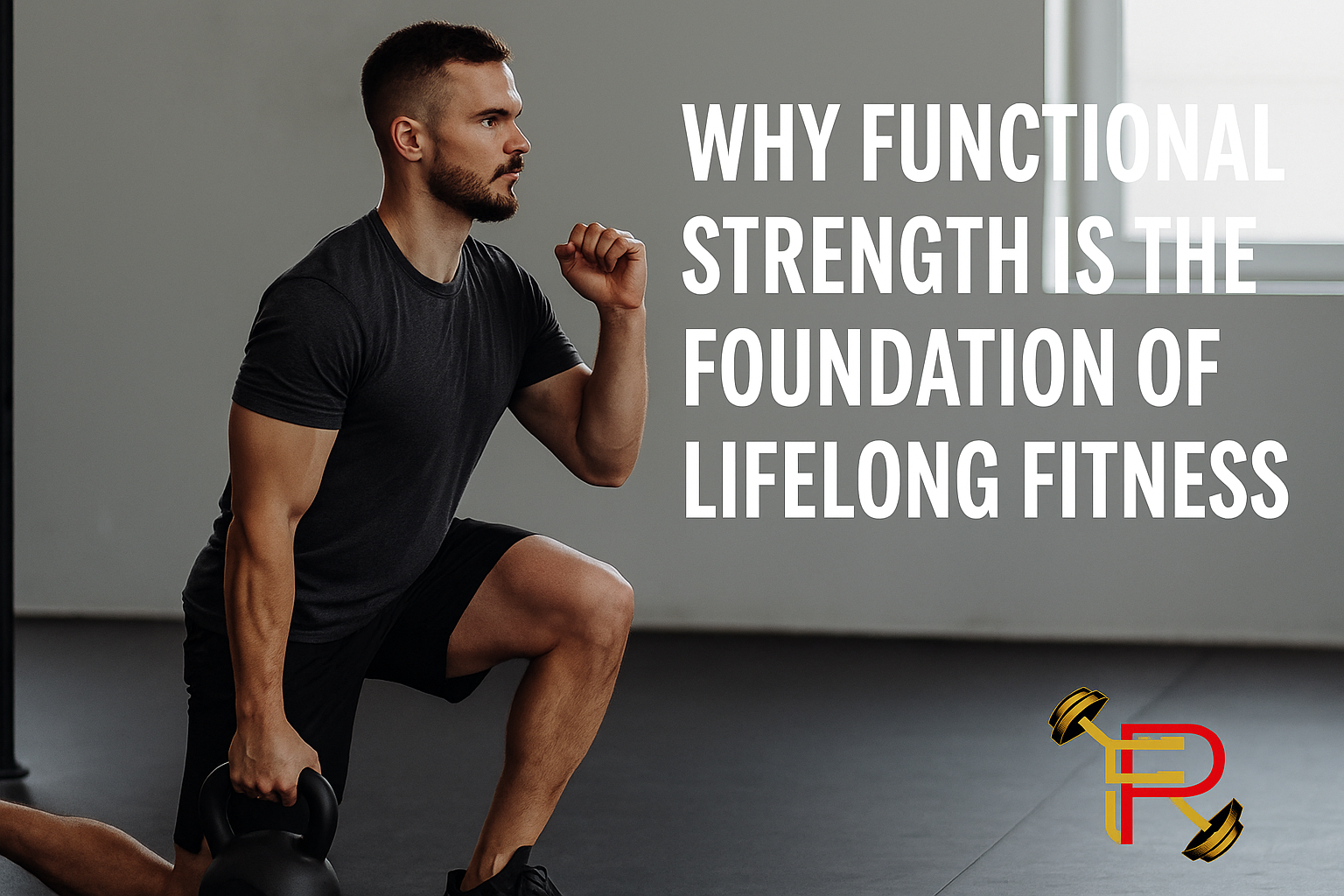
When most people think of strength training, they picture lifting heavy weights or chasing new personal records. But true strength isn’t just about the numbers on a barbell — it’s about how well your body performs in everyday life.
That’s what functional strength is all about: building the kind of power, balance, and resilience that helps you move, live, and feel better for years to come.
What Functional Strength Really Means
Functional strength isn’t a buzzword — it’s the foundation of how we move. It focuses on training your body through natural, real-world movement patterns: squatting, hinging, pushing, pulling, rotating, and carrying. Instead of isolating single muscles, functional training teaches your body to work as a connected system. The goal isn’t just to look strong — it’s to be strong in ways that actually matter.
When your training mirrors the way you move in daily life, everything improves: posture, stability, coordination, and confidence. You move with purpose — not pain.
Why It Matters Beyond the Gym
The benefits of functional strength extend far beyond workouts. It helps you climb stairs without knee pain, lift groceries without straining your back, or play with your kids without feeling wiped out.
In other words, it translates. You’re not just getting fit for the gym — you’re preparing your body for life.
Functional training also improves the smaller, often ignored stabilizing muscles that protect your joints. When you learn to move efficiently, you reduce stress on your spine, shoulders, and knees — the areas most people injure from repetitive, non-functional habits.
The Longevity Connection
Functional strength isn’t just about performance — it’s about longevity. As we age, we naturally lose muscle mass, coordination, and mobility. The right kind of strength training helps slow that decline, keeping your body capable and resilient.
Think of muscle as long-term insurance for your health. It supports your metabolism, protects your joints, and gives you independence as you get older. When your body can move freely, recover quickly, and resist injury, you’re adding quality years to your life — not just more workouts to your week.
How to Build Functional Strength
The good news is you don’t need fancy equipment or endless hours in the gym. You just need smart, consistent training focused on quality movement.
Here’s how to start:
- Prioritize movement patterns, not muscles. Focus on exercises that mimic real life: squats, hinges, lunges, presses, rows, and carries.
- Train through full ranges of motion. Move your joints the way they were designed to move — it builds mobility and control.
- Slow down. Control each rep instead of rushing through it. Quality of movement always beats quantity.
- Balance your strength. Combine mobility, stability, and power so your body stays adaptable.
- Recover intentionally. Functional strength isn’t about burnout — it’s about building durability.
When you move well, you feel better. And when you feel better, consistency becomes automatic.
In Conclusion
Functional strength is the foundation that everything else in fitness is built upon. It’s what allows you to train hard and stay healthy, to age without limits, and to live without pain.
So the next time you train, don’t just ask how much you can lift — ask how well you can move.
Because strength isn’t about the weight you carry in the gym. It’s about how effortlessly you carry yourself through life.
Written by Kristian Martorana, Certified Personal Trainer and Founder of Paragon Fit LLC. Learn more at Paragon Fit LLC


